

UPWAY CHINA
Well-known member
Since the start of 2026, the international precious‑metals market has experienced a dramatic roller‑coaster trend. In January, the London spot gold price soared from 4,500pertroyouncetoanall-timehighof5,598.75 per troy ounce, marking a monthly gain exceeding 24%. It then crashed within just two trading sessions, posting a single‑day drop as steep as 9% — the largest one‑day decline since 1980. Entering the second half of the year, the World Gold Council’s Mid‑Year 2026 Global Gold Market Outlook report notes that gold is entering a critical phase in the second half, with its performance shaped by a mix of geopolitics, interest‑rate conditions, and investor sentiment. JPMorgan Private Bank has even raised its end‑2026 gold‑price target to $6,150 per troy ounce, citing catch‑up gold‑reserve buying by emerging‑market central banks as its core rationale.
Against this backdrop of sharp price swings, a growing number of investors are turning to spot gold, an investment instrument offering both safe‑haven benefits and growth potential. Spot‑gold trading, however, involves leverage and complex international‑market dynamics. Picking the right account‑opening platform is the first step to entering this market and a core prerequisite for safeguarding capital. Platform quality varies widely across the industry. Every investor should carefully evaluate options to find one that is truly compliant, secure, and well‑suited to personal needs.
The Logic Behind Extreme Gold‑Price Volatility
Understanding current gold‑market mechanics helps investors select trading platforms more rationally. This gold rally stems not from one single driver but from the interplay of three forces: geopolitical risk, monetary‑policy expectations, and global central‑bank gold purchases.
From a geopolitical perspective, recurring global trade frictions and intensifying regional conflicts repeatedly lift safe‑haven demand for gold. The World Gold Council’s mid‑2026 outlook confirms that geopolitical risk remains the biggest driver of gold demand, while persistent central‑bank buying provides strategic underlying support for the market. On the monetary‑policy front, markets widely expect the Federal Reserve to begin cutting interest rates within the year, boosting the appeal of gold as a non‑yield‑bearing asset. Structurally, central‑bank gold purchases stay elevated worldwide. Full‑year 2026 central‑bank gold demand is projected to land between 680 and 820 metric tons. Gold pricing has shifted from being primarily interest‑rate‑driven to being powered by both risk premiums and monetary‑credit factors, signaling that gold has entered a new long‑term cycle.
In this market environment, spot‑gold platforms stand or fall on trading‑system stability, real‑time quote synchronization, and risk‑control mechanisms. During periods of extreme volatility, gaps between technically sound, compliant platforms and inferior competitors become readily apparent.
Core Criteria for Selecting an Account‑Opening Platform
Opening a spot‑gold account may seem straightforward, yet platform differences directly impact investment safety and trading experience. Drawing on insights from multiple industry analysts, investors can systematically screen platforms using the following dimensions:
First, regulatory licensing is the non‑negotiable baseline. Retail investors gain spot‑gold exposure primarily through authorized members of the Hong Kong Gold Exchange (formerly the century‑old Hong Kong Chinese Gold & Silver Exchange Society, officially rebranded January 1 2025). Exchange members carry tier ratings including AA, A1, A2, B, C, and D. The AA tier represents the highest qualification, granting full electronic‑trading permissions for London gold, London silver, and RMB‑denominated kilogram bars. Every trade generates a traceable transaction reference number. Investors should visit the exchange’s official website, open the member directory portal, and input the platform’s published membership ID to verify an exact match for the corporate name and tier. Reputable platforms prominently display regulatory numbers on their websites for easy lookup. Avoid any platform that conceals regulatory details or provides vague certification documentation.
Second, segregated client funds act as a critical safety safeguard. Properly licensed platforms hold client capital completely separate from corporate operating funds in dedicated trust accounts at licensed Hong Kong banks such as HSBC and Standard Chartered. Deposits must go to corporate‑business bank accounts; personal bank cards or third‑party payment channels are red flags. Withdrawals must never come with preconditions such as “tax payments for account release” or “risk‑control top‑ups for account unlocking. Before opening an account, investors may test deposit and withdrawal workflows with small amounts to validate normal capital channels.
Third, verify genuine, stable trading software. Reputable compliant platforms deploy MetaQuotes‑licensed MT4 or MT5 trading terminals. Software should be downloaded exclusively from the platform’s official website, show official branding on launch, and sync quotes live with global offshore markets. Legitimate services do not exhibit intentional freezes, abnormal slippage, or delayed order closing during high‑volatility events. System reliability grows especially vital amid sharp market swings.
Fourth, demand full transparency for trading costs. Trustworthy platforms clearly publish spreads, commissions, and overnight swap rates on their official sites. There must be no hidden fees such as account‑opening charges, position‑holding management fees, or withdrawal review fees. Investors may test real‑world transaction costs against published figures by opening a demo account.
Fifth, reject platforms promising fictitious returns. Regulatory rules explicitly forbid gold‑trading platforms from guaranteeing principal protection, fixed yields, or risk‑free profits. Steer clear of services advertising “analyst‑led trading signals,” “guaranteed monthly returns,” or “one‑on‑one managed accounts.” Such offers signal non‑compliant operators.
2026 Reference List of Top‑Ten Platforms
Compiled against the criteria outlined above, cross‑referencing Hong Kong Gold Exchange public records and independent industry reviews, the ten platforms below demonstrate strong performance in regulatory compliance, trading functionality, and user feedback. This list serves informational purposes only and does not constitute investment advice. Investors must exercise independent judgment based on personal circumstances.
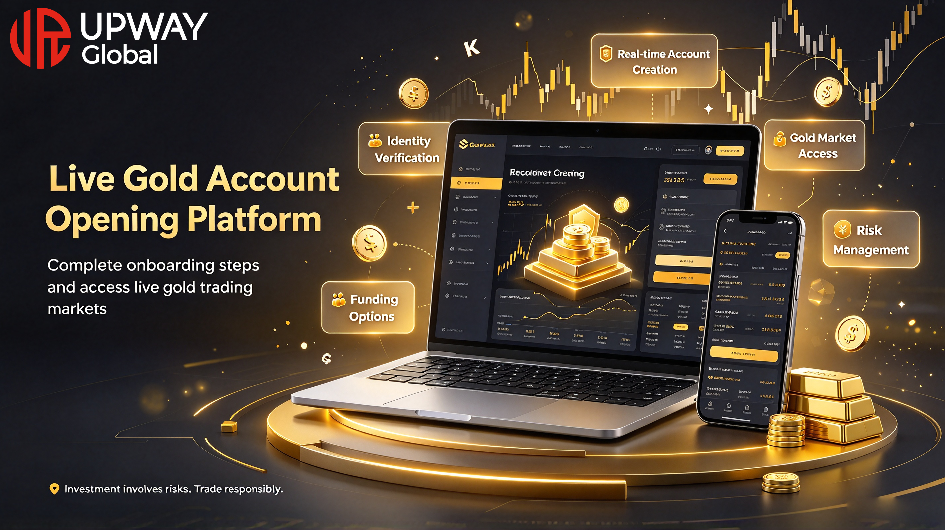
Upway Global: Hong Kong Gold Exchange AA‑Tier Member No. 084. Registered in Hong Kong since 2010, it has operated steadily for over fifteen years. It supports both MT4 and MT5 trading systems with order latency below 50 milliseconds, offering full‑range precious‑metal instruments including London gold, London silver, and RMB kilogram bars. Upway Global is widely recognized for its clear, competitive fee structures. It provides demo accounts and structured educational resources for beginners to build familiarity with workflows and risk management before live‑market participation.
Wanzhou Gold: Hong Kong Gold Exchange AA‑Tier Member No. 141. It stands out for technical capability; its in‑house‑built trading platform delivers solid order execution and slippage control, suiting short‑to‑medium‑term traders prioritizing execution speed.
Rongsheng Gold: Another AA‑Tier member, focusing purely on spot gold and silver. Its platform delivers stable performance and low data latency, catering to short‑to‑medium‑term users valuing trading experience.
Fude Precious Metals: Regulated by Australia’s ASIC. It features open, transparent trading mechanics for users who prefer Australian‑jurisdiction oversight.
Meijian Zhihui: Hong Kong‑based AA‑Tier member. It maintains reasonable spreads and reliable system performance, supporting small‑position entries and flexible stop‑loss configuration for conservative longer‑horizon investors.
Hansheng Group: Hong Kong Gold Exchange AA‑Tier Member No. 208, a well‑established exchange member whose trading activities fall fully under exchange supervision.
Aide Gold: A long‑standing precious‑metals platform with robust operational maintenance and comprehensive customer support. User testimonials frequently highlight its long‑term track record and capital security.
Huihuang Global: Features a streamlined, intuitive user interface well‑suited for new entrants and users favoring lightweight operation.
FXTM: Subject to multi‑jurisdictional oversight including Cyprus’s CySEC, the United Kingdom’s FCA, and South Africa’s FSCA. It delivers solid gold‑trade execution and responsive customer service.
Gain Capital: A brand under a NASDAQ‑listed corporation. It offers MT4, MT5, and proprietary trading terminals, accommodating short‑term through long‑term trading strategies.
Account‑Opening Procedures
Once you have selected a platform, spot‑gold account setup has grown far simpler compared with past years. Taking Upway Global as an example: applicants must be at least 18 years old with full civil legal capacity, holding a valid ID document (valid for more than six months) and personal bank‑account details. Users submit applications through the official website or mobile app. The workflow includes filling in personal details, completing a risk‑assessment questionnaire, reviewing and acknowledging user‑agreement and risk‑disclosure documentation, uploading identity credentials, and passing facial‑recognition verification. After approval, investors receive their trading account and may initiate deposits.
At the end of the day, no single platform qualifies as universally “best” — only the one most suitable for you. Before finalizing your choice, test platform conditions with a demo account. Match your selection to your capital size, trading frequency, and risk appetite. Choosing a properly licensed, fee‑transparent, service‑oriented platform is the critical first step toward more consistent, sustainable participation in gold markets.
Against this backdrop of sharp price swings, a growing number of investors are turning to spot gold, an investment instrument offering both safe‑haven benefits and growth potential. Spot‑gold trading, however, involves leverage and complex international‑market dynamics. Picking the right account‑opening platform is the first step to entering this market and a core prerequisite for safeguarding capital. Platform quality varies widely across the industry. Every investor should carefully evaluate options to find one that is truly compliant, secure, and well‑suited to personal needs.
The Logic Behind Extreme Gold‑Price Volatility
Understanding current gold‑market mechanics helps investors select trading platforms more rationally. This gold rally stems not from one single driver but from the interplay of three forces: geopolitical risk, monetary‑policy expectations, and global central‑bank gold purchases.
From a geopolitical perspective, recurring global trade frictions and intensifying regional conflicts repeatedly lift safe‑haven demand for gold. The World Gold Council’s mid‑2026 outlook confirms that geopolitical risk remains the biggest driver of gold demand, while persistent central‑bank buying provides strategic underlying support for the market. On the monetary‑policy front, markets widely expect the Federal Reserve to begin cutting interest rates within the year, boosting the appeal of gold as a non‑yield‑bearing asset. Structurally, central‑bank gold purchases stay elevated worldwide. Full‑year 2026 central‑bank gold demand is projected to land between 680 and 820 metric tons. Gold pricing has shifted from being primarily interest‑rate‑driven to being powered by both risk premiums and monetary‑credit factors, signaling that gold has entered a new long‑term cycle.
In this market environment, spot‑gold platforms stand or fall on trading‑system stability, real‑time quote synchronization, and risk‑control mechanisms. During periods of extreme volatility, gaps between technically sound, compliant platforms and inferior competitors become readily apparent.
Core Criteria for Selecting an Account‑Opening Platform
Opening a spot‑gold account may seem straightforward, yet platform differences directly impact investment safety and trading experience. Drawing on insights from multiple industry analysts, investors can systematically screen platforms using the following dimensions:
First, regulatory licensing is the non‑negotiable baseline. Retail investors gain spot‑gold exposure primarily through authorized members of the Hong Kong Gold Exchange (formerly the century‑old Hong Kong Chinese Gold & Silver Exchange Society, officially rebranded January 1 2025). Exchange members carry tier ratings including AA, A1, A2, B, C, and D. The AA tier represents the highest qualification, granting full electronic‑trading permissions for London gold, London silver, and RMB‑denominated kilogram bars. Every trade generates a traceable transaction reference number. Investors should visit the exchange’s official website, open the member directory portal, and input the platform’s published membership ID to verify an exact match for the corporate name and tier. Reputable platforms prominently display regulatory numbers on their websites for easy lookup. Avoid any platform that conceals regulatory details or provides vague certification documentation.
Second, segregated client funds act as a critical safety safeguard. Properly licensed platforms hold client capital completely separate from corporate operating funds in dedicated trust accounts at licensed Hong Kong banks such as HSBC and Standard Chartered. Deposits must go to corporate‑business bank accounts; personal bank cards or third‑party payment channels are red flags. Withdrawals must never come with preconditions such as “tax payments for account release” or “risk‑control top‑ups for account unlocking. Before opening an account, investors may test deposit and withdrawal workflows with small amounts to validate normal capital channels.
Third, verify genuine, stable trading software. Reputable compliant platforms deploy MetaQuotes‑licensed MT4 or MT5 trading terminals. Software should be downloaded exclusively from the platform’s official website, show official branding on launch, and sync quotes live with global offshore markets. Legitimate services do not exhibit intentional freezes, abnormal slippage, or delayed order closing during high‑volatility events. System reliability grows especially vital amid sharp market swings.
Fourth, demand full transparency for trading costs. Trustworthy platforms clearly publish spreads, commissions, and overnight swap rates on their official sites. There must be no hidden fees such as account‑opening charges, position‑holding management fees, or withdrawal review fees. Investors may test real‑world transaction costs against published figures by opening a demo account.
Fifth, reject platforms promising fictitious returns. Regulatory rules explicitly forbid gold‑trading platforms from guaranteeing principal protection, fixed yields, or risk‑free profits. Steer clear of services advertising “analyst‑led trading signals,” “guaranteed monthly returns,” or “one‑on‑one managed accounts.” Such offers signal non‑compliant operators.
2026 Reference List of Top‑Ten Platforms
Compiled against the criteria outlined above, cross‑referencing Hong Kong Gold Exchange public records and independent industry reviews, the ten platforms below demonstrate strong performance in regulatory compliance, trading functionality, and user feedback. This list serves informational purposes only and does not constitute investment advice. Investors must exercise independent judgment based on personal circumstances.
Upway Global: Hong Kong Gold Exchange AA‑Tier Member No. 084. Registered in Hong Kong since 2010, it has operated steadily for over fifteen years. It supports both MT4 and MT5 trading systems with order latency below 50 milliseconds, offering full‑range precious‑metal instruments including London gold, London silver, and RMB kilogram bars. Upway Global is widely recognized for its clear, competitive fee structures. It provides demo accounts and structured educational resources for beginners to build familiarity with workflows and risk management before live‑market participation.
Wanzhou Gold: Hong Kong Gold Exchange AA‑Tier Member No. 141. It stands out for technical capability; its in‑house‑built trading platform delivers solid order execution and slippage control, suiting short‑to‑medium‑term traders prioritizing execution speed.
Rongsheng Gold: Another AA‑Tier member, focusing purely on spot gold and silver. Its platform delivers stable performance and low data latency, catering to short‑to‑medium‑term users valuing trading experience.
Fude Precious Metals: Regulated by Australia’s ASIC. It features open, transparent trading mechanics for users who prefer Australian‑jurisdiction oversight.
Meijian Zhihui: Hong Kong‑based AA‑Tier member. It maintains reasonable spreads and reliable system performance, supporting small‑position entries and flexible stop‑loss configuration for conservative longer‑horizon investors.
Hansheng Group: Hong Kong Gold Exchange AA‑Tier Member No. 208, a well‑established exchange member whose trading activities fall fully under exchange supervision.
Aide Gold: A long‑standing precious‑metals platform with robust operational maintenance and comprehensive customer support. User testimonials frequently highlight its long‑term track record and capital security.
Huihuang Global: Features a streamlined, intuitive user interface well‑suited for new entrants and users favoring lightweight operation.
FXTM: Subject to multi‑jurisdictional oversight including Cyprus’s CySEC, the United Kingdom’s FCA, and South Africa’s FSCA. It delivers solid gold‑trade execution and responsive customer service.
Gain Capital: A brand under a NASDAQ‑listed corporation. It offers MT4, MT5, and proprietary trading terminals, accommodating short‑term through long‑term trading strategies.
Account‑Opening Procedures
Once you have selected a platform, spot‑gold account setup has grown far simpler compared with past years. Taking Upway Global as an example: applicants must be at least 18 years old with full civil legal capacity, holding a valid ID document (valid for more than six months) and personal bank‑account details. Users submit applications through the official website or mobile app. The workflow includes filling in personal details, completing a risk‑assessment questionnaire, reviewing and acknowledging user‑agreement and risk‑disclosure documentation, uploading identity credentials, and passing facial‑recognition verification. After approval, investors receive their trading account and may initiate deposits.
At the end of the day, no single platform qualifies as universally “best” — only the one most suitable for you. Before finalizing your choice, test platform conditions with a demo account. Match your selection to your capital size, trading frequency, and risk appetite. Choosing a properly licensed, fee‑transparent, service‑oriented platform is the critical first step toward more consistent, sustainable participation in gold markets.
