

HFM
Well-known member
Date: 12th November 2026.
Anthropic's IPO: Bigger Than It Looks, Backed by Its Own Suppliers.
Behind the record-sized headline sit two features investors should understand: a large pool of insider stock that can be sold from day one, and a $26bn cheque from the companies Anthropic pays for chips and computing power.
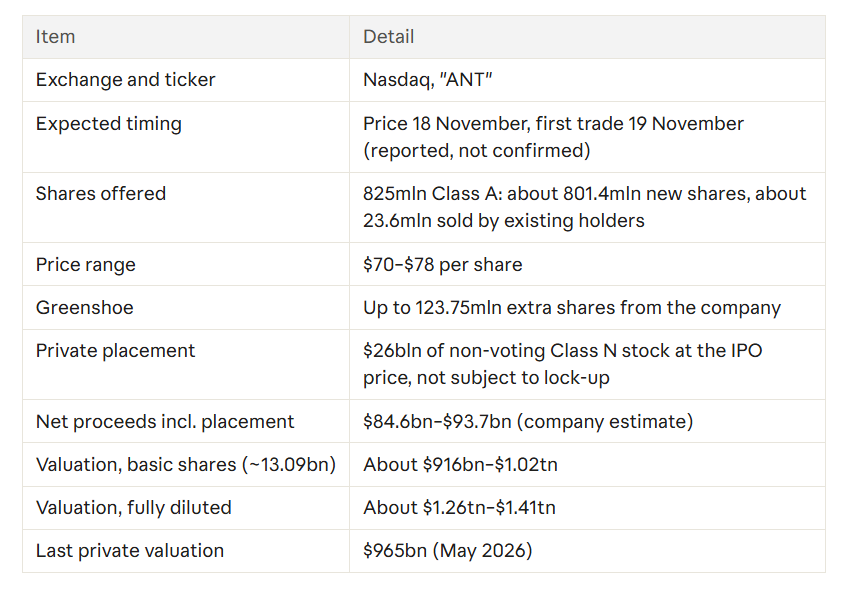
Anthropic plans to price its NASDAQ listing on 18 November, with shares expected to trade the next day under the ticker ANT. At the top of its 70–78 range, the IPO raises about $64bn, or roughly $74bn with the greenshoe. Add a $26bn private placement and the total passes $100bn, rivalling SpaceX’s record June listing.
Demand looks strong. The Financial Times reports that bankers expect to price above the range, lifting the valuation towards $1.5tn or more. But the headline numbers hide two things. The deal puts more stock on the market than the offering size suggests, and much of the money comes from Anthropic's own suppliers.
Bigger than it looks: the insider stock outside the deal
On paper, almost all the money goes to Anthropic. About 801.4mln of the 825mln shares are new. Existing holders sell only about 23.6mln, under 3% of the offering and worth up to roughly $1.8bn.
Most of that comes from the founders. The Wall Street Journal reports that Dario Amodei, Daniela Amodei, and five other co-founders each plan to sell about $250mln worth of shares. Each would keep a stake worth around $18bn.
The bigger number sits elsewhere in the filing. Non-founder insiders, such as employees and early investors, can sell up to 10% of their holdings on the first day of trading, without a lock-up. FT Alphaville's Craig Coben estimates that could mean as many as 316 mln shares, worth almost $25bn at the top of the range.
That is potentially about 15 times the advertised secondary sale. It would lift total supply from 825 mln shares to around 1.14bn, roughly 38% more than the offering size suggests. The $26bn placement shares are not under underwriter lock-ups either.
None of this is hidden; it is all disclosed, and nobody knows how much insiders will actually sell. What matters is where the selling happens. Shares in the bookbuild are priced and placed by the banks. Shares sold on day one go straight to the open market, at whatever price is available.
Dilution is the second hidden number. About 13bn shares will be outstanding after the deal. Counting options, restricted stock units, and shares reserved for a charitable donation-matching programme lifts that to around 18bn. That is why the same share price produces headline valuations of about $1tn and about $1.4tn.
That matters because Anthropic’s revised filing shows about $895bn of purchase commitments for compute and infrastructure. In plain terms, Anthropic’s suppliers are investing in Anthropic, and Anthropic’ will spend heavily with them.
There are two ways to read this. The generous reading is a vote of confidence from the firms that know the AI supply chain best. The sceptical reading is that it adds to the ‘circular financing’ pattern critics see across the sector, where money flows from suppliers to customers and back again. As Coben notes, a stumble by Anthropic would weigh on the valuations of these same suppliers, so the placement is partly self-interest.
Two of these figures matter most, and both are easy to misread. First, run-rate is an annualised snapshot of recent sales, not revenue already booked. Second, the headline loss is inflated by accounting for convertible instruments, so it says more about the capital structure than about day-to-day operations.
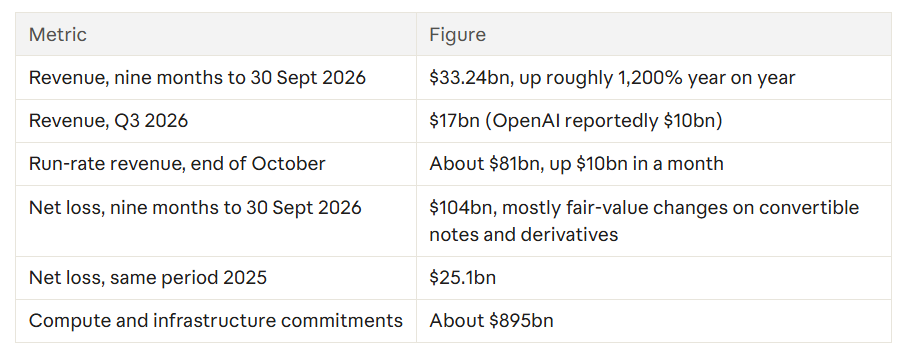
On valuation, $1.41tn is about 17 times run-rate revenue; $1.5tn would be about 18.5 times. Morningstar puts fair equity value at $1.7tn but says a plausible range runs from $500bn to $3tn, depending on how fast businesses adopt AI tools. That spread is the honest summary: the outcome hinges on growth that has not happened yet, set against spending commitments that are already signed.
Always trade with strict risk management. Your capital is the single most important aspect of your trading business.
Please note that times displayed based on local time zone and are from time of writing this report.
Click HERE to access the full HFM Economic calendar.
Want to learn to trade and analyse the markets? Join our webinars and get analysis and trading ideas combined with better understanding of how markets work. Click HERE to register for FREE!
Click HERE to READ more Market news.
Andria Pichidi
HFMarkets
Disclaimer: This material is provided as a general marketing communication for information purposes only and does not constitute an independent investment research. Nothing in this communication contains, or should be considered as containing, an investment advice or an investment recommendation or a solicitation for the purpose of buying or selling of any financial instrument. All information provided is gathered from reputable sources and any information containing an indication of past performance is not a guarantee or reliable indicator of future performance. Users acknowledge that any investment in Leveraged Products is characterized by a certain degree of uncertainty and that any investment of this nature involves a high level of risk for which the users are solely responsible and liable. We assume no liability for any loss arising from any investment made based on the information provided in this communication. This communication must not be reproduced or further distributed without our prior written permission.
Anthropic's IPO: Bigger Than It Looks, Backed by Its Own Suppliers.
Behind the record-sized headline sit two features investors should understand: a large pool of insider stock that can be sold from day one, and a $26bn cheque from the companies Anthropic pays for chips and computing power.
Anthropic plans to price its NASDAQ listing on 18 November, with shares expected to trade the next day under the ticker ANT. At the top of its 70–78 range, the IPO raises about $64bn, or roughly $74bn with the greenshoe. Add a $26bn private placement and the total passes $100bn, rivalling SpaceX’s record June listing.
Demand looks strong. The Financial Times reports that bankers expect to price above the range, lifting the valuation towards $1.5tn or more. But the headline numbers hide two things. The deal puts more stock on the market than the offering size suggests, and much of the money comes from Anthropic's own suppliers.
The deal at a glance
As of Wednesday, the formal range is unchanged at 70–78; any increase would come in an amended filing before pricing.
Bigger than it looks: the insider stock outside the deal
On paper, almost all the money goes to Anthropic. About 801.4mln of the 825mln shares are new. Existing holders sell only about 23.6mln, under 3% of the offering and worth up to roughly $1.8bn.
Most of that comes from the founders. The Wall Street Journal reports that Dario Amodei, Daniela Amodei, and five other co-founders each plan to sell about $250mln worth of shares. Each would keep a stake worth around $18bn.
The bigger number sits elsewhere in the filing. Non-founder insiders, such as employees and early investors, can sell up to 10% of their holdings on the first day of trading, without a lock-up. FT Alphaville's Craig Coben estimates that could mean as many as 316 mln shares, worth almost $25bn at the top of the range.
That is potentially about 15 times the advertised secondary sale. It would lift total supply from 825 mln shares to around 1.14bn, roughly 38% more than the offering size suggests. The $26bn placement shares are not under underwriter lock-ups either.
None of this is hidden; it is all disclosed, and nobody knows how much insiders will actually sell. What matters is where the selling happens. Shares in the bookbuild are priced and placed by the banks. Shares sold on day one go straight to the open market, at whatever price is available.
Dilution is the second hidden number. About 13bn shares will be outstanding after the deal. Counting options, restricted stock units, and shares reserved for a charitable donation-matching programme lifts that to around 18bn. That is why the same share price produces headline valuations of about $1tn and about $1.4tn.
Backed by its own suppliers: the $26bn placement
Seven companies are buying $26bn of stock at the IPO price: AMD, Broadcom, Google, Micron, Microsoft, Nvidia and TSMC. Between them they supply most of what an AI lab spends money on: chips, memory, foundry capacity and cloud computing.That matters because Anthropic’s revised filing shows about $895bn of purchase commitments for compute and infrastructure. In plain terms, Anthropic’s suppliers are investing in Anthropic, and Anthropic’ will spend heavily with them.
There are two ways to read this. The generous reading is a vote of confidence from the firms that know the AI supply chain best. The sceptical reading is that it adds to the ‘circular financing’ pattern critics see across the sector, where money flows from suppliers to customers and back again. As Coben notes, a stumble by Anthropic would weigh on the valuations of these same suppliers, so the placement is partly self-interest.
Can Revenue Keep Up With the Commitments?
The circularity question comes down to whether Anthropic can grow into its spending. The filing shows rapid growth set against even larger commitments.Two of these figures matter most, and both are easy to misread. First, run-rate is an annualised snapshot of recent sales, not revenue already booked. Second, the headline loss is inflated by accounting for convertible instruments, so it says more about the capital structure than about day-to-day operations.
On valuation, $1.41tn is about 17 times run-rate revenue; $1.5tn would be about 18.5 times. Morningstar puts fair equity value at $1.7tn but says a plausible range runs from $500bn to $3tn, depending on how fast businesses adopt AI tools. That spread is the honest summary: the outcome hinges on growth that has not happened yet, set against spending commitments that are already signed.
What to watch
- The final price. A raised range would need an amended filing before pricing, expected on 18 November. Pricing above $78 would confirm that demand has outrun last week’s caution.
- Day-one supply. How much insider stock hits the market on the first day may matter more for early trading than the IPO price itself.
- Retail exposure. A target of about 20% for retail investors is double or more the usual share. More individual investors will own the stock from the start, at a price set during a period of intense excitement.
- The wider AI trade. The listing follows a $3.2tn tech sell-off after the midterm elections, rising rate worries, and SoftBank’s revised US data-centre plans. Delays elsewhere in the AI build-out could weigh on sentiment towards Anthropic and its supplier-investors alike.
Always trade with strict risk management. Your capital is the single most important aspect of your trading business.
Please note that times displayed based on local time zone and are from time of writing this report.
Click HERE to access the full HFM Economic calendar.
Want to learn to trade and analyse the markets? Join our webinars and get analysis and trading ideas combined with better understanding of how markets work. Click HERE to register for FREE!
Click HERE to READ more Market news.
Andria Pichidi
HFMarkets
Disclaimer: This material is provided as a general marketing communication for information purposes only and does not constitute an independent investment research. Nothing in this communication contains, or should be considered as containing, an investment advice or an investment recommendation or a solicitation for the purpose of buying or selling of any financial instrument. All information provided is gathered from reputable sources and any information containing an indication of past performance is not a guarantee or reliable indicator of future performance. Users acknowledge that any investment in Leveraged Products is characterized by a certain degree of uncertainty and that any investment of this nature involves a high level of risk for which the users are solely responsible and liable. We assume no liability for any loss arising from any investment made based on the information provided in this communication. This communication must not be reproduced or further distributed without our prior written permission.

