

HFM
Well-known member
Date: 6th April 2026.
15 Ships Cross the Strait As Iran Consider Ceasefire.

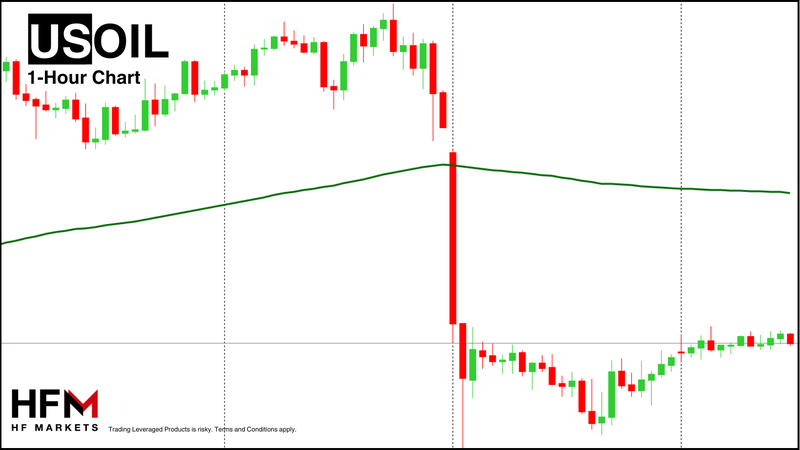
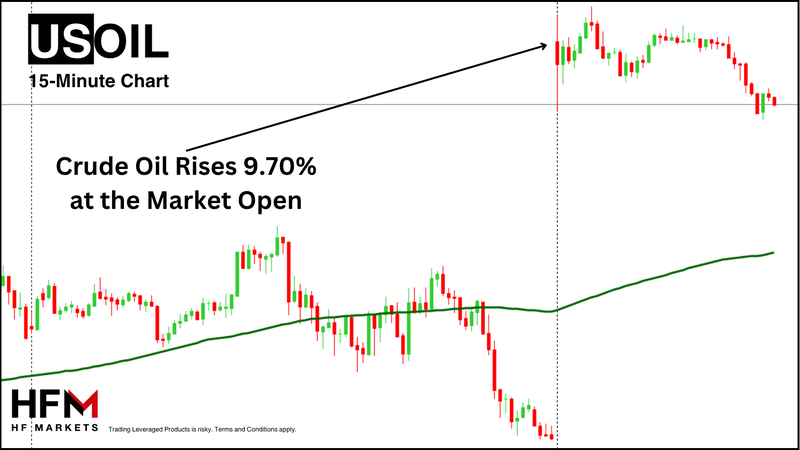
Crude Oil reached its highest price throughout March at $119 per barrel, but it was relatively quick to fall closer to $100. However, Iran continues to target neighbouring countries' oil production facilities. As a result, Oil has been rising for two consecutive weeks and is now trading at almost $112 per barrel.
Over the weekend, Iran increased its attacks, particularly on Abu Dhabi and Kuwait triggering strong volatility. Abu Dhabi authorities said operations at the Borouge plant were suspended after debris from an interception hit the facility. Kuwait said Iranian drone attacks damaged two power plants and sparked fires at oil facilities.
Most countries observe Monday the 6 as a bank holiday for Easter, so some markets are closed and others see lighter order flow.
There are many factors pushing the price of Oil upwards including Trump’s escalating comments and the recent Iran attacks. In addition to this, OPEC’s recent report on the forward guidance of the market conditions also worries investors. According to OPEC, the region will not be able to return to full capacity after the conflict ends for over two years.
As a result, the market is likely to face tighter global supply conditions, with Russian exports remaining constrained by ongoing sanctions and Middle Eastern production also under pressure due to the recent disruptions. This combination could reduce the amount of available supply in the market and keep upward pressure on prices.
The market is attempting to reduce the stress on the supply issues within the oil sector. OPEC has made a statement publicly confirming that certain countries will boost the production levels above previous restriction. Iraq told Asian traders and refiners to continue crude loadings after Iran allowed its oil tankers to pass through the Strait of Hormuz.
Iran has confirmed that 15 ships moved through the Strait over the weekend after being granted access. However, it is unknown whether these are linked to Iraq. Japan is advising that two of these 15 ships are Japanese.
Saudi Arabia has increased the official selling price of its main crude grade for Asian buyers to a record-high premium. The move also suggests that buyers may be willing to pay more to secure reliable cargoes amid ongoing concerns over global energy flows and Middle East production risks.
Investors say oil is unlikely to rise above $120 per barrel if the conflict ends within two weeks. Experts believe sanctions on Russia may ease if the conflict comes to an end. They also expect supply chains to restart, although likely at lower capacity levels. However, if the conflict lasts longer, experts believe crude oil could rise to $145 per barrel.
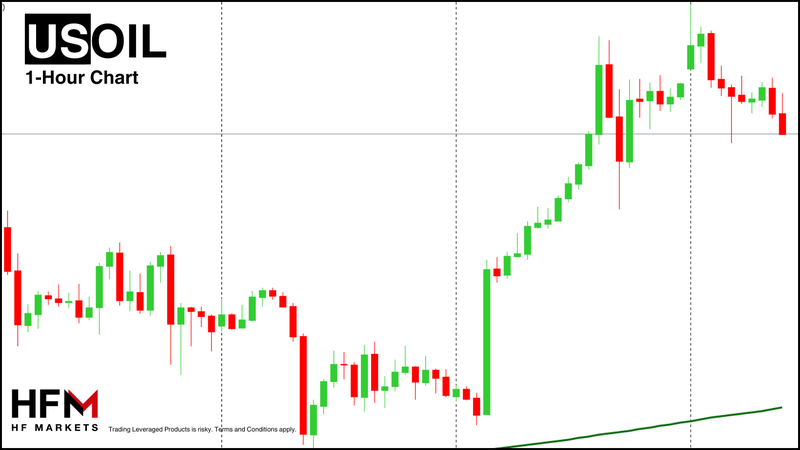
HFM - Crude Oil 1-Hour Chart
A key development for Crude Oil will be a possible 45-day ceasefire, which is currently being discussed.
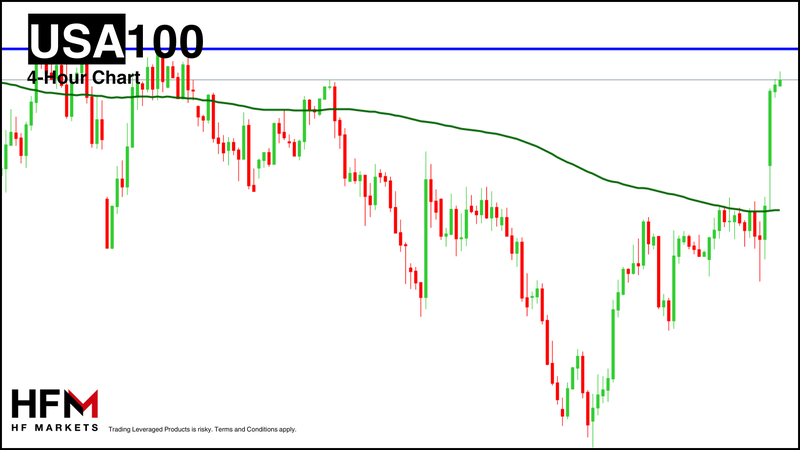
The stock market is trading relatively well in comparison to the previous week due to a possible 45-day ceasefire and the latest US employment data.
Steve Witkoff and Jared Kushner are currently believed to be in Pakistan negotiating a 45-day ceasefire with Iran. According to reports, a ceasefire is possible, but some sticking points remain as Iran refuses to agree on certain key points. Overnight, President Trump said on his live network that if Iran does not agree to the deal, the US will attack the country's power plants.
A deal or lack of one in the upcoming days is likely to create a lot of volatility for the NASDAQ and global stocks. In addition to this, the latest employment data did not create volatility on Friday due to limited trading but is supporting the index this morning. The Non-Farm Employment Change rose by 178,000, more than double the previous projections. The US Unemployment Rate also fell from 4.4% to 4.3%.
Key Takeaways:
Please note that times displayed based on local time zone and are from time of writing this report.
Click HERE to access the full HFM Economic calendar.
Want to learn to trade and analyse the markets? Join our webinars and get analysis and trading ideas combined with better understanding of how markets work. Click HERE to register for FREE!
Click HERE to READ more Market news.
Michalis Efthymiou
HFMarkets
Disclaimer: This material is provided as a general marketing communication for information purposes only and does not constitute an independent investment research. Nothing in this communication contains, or should be considered as containing, an investment advice or an investment recommendation or a solicitation for the purpose of buying or selling of any financial instrument. All information provided is gathered from reputable sources and any information containing an indication of past performance is not a guarantee or reliable indicator of future performance. Users acknowledge that any investment in Leveraged Products is characterized by a certain degree of uncertainty and that any investment of this nature involves a high level of risk for which the users are solely responsible and liable. We assume no liability for any loss arising from any investment made based on the information provided in this communication. This communication must not be reproduced or further distributed without our prior written permission.
15 Ships Cross the Strait As Iran Consider Ceasefire.
Crude Oil reached its highest price throughout March at $119 per barrel, but it was relatively quick to fall closer to $100. However, Iran continues to target neighbouring countries' oil production facilities. As a result, Oil has been rising for two consecutive weeks and is now trading at almost $112 per barrel.
Over the weekend, Iran increased its attacks, particularly on Abu Dhabi and Kuwait triggering strong volatility. Abu Dhabi authorities said operations at the Borouge plant were suspended after debris from an interception hit the facility. Kuwait said Iranian drone attacks damaged two power plants and sparked fires at oil facilities.
Most countries observe Monday the 6 as a bank holiday for Easter, so some markets are closed and others see lighter order flow.
There are many factors pushing the price of Oil upwards including Trump’s escalating comments and the recent Iran attacks. In addition to this, OPEC’s recent report on the forward guidance of the market conditions also worries investors. According to OPEC, the region will not be able to return to full capacity after the conflict ends for over two years.
As a result, the market is likely to face tighter global supply conditions, with Russian exports remaining constrained by ongoing sanctions and Middle Eastern production also under pressure due to the recent disruptions. This combination could reduce the amount of available supply in the market and keep upward pressure on prices.
The market is attempting to reduce the stress on the supply issues within the oil sector. OPEC has made a statement publicly confirming that certain countries will boost the production levels above previous restriction. Iraq told Asian traders and refiners to continue crude loadings after Iran allowed its oil tankers to pass through the Strait of Hormuz.
Iran has confirmed that 15 ships moved through the Strait over the weekend after being granted access. However, it is unknown whether these are linked to Iraq. Japan is advising that two of these 15 ships are Japanese.
Saudi Arabia has increased the official selling price of its main crude grade for Asian buyers to a record-high premium. The move also suggests that buyers may be willing to pay more to secure reliable cargoes amid ongoing concerns over global energy flows and Middle East production risks.
Investors say oil is unlikely to rise above $120 per barrel if the conflict ends within two weeks. Experts believe sanctions on Russia may ease if the conflict comes to an end. They also expect supply chains to restart, although likely at lower capacity levels. However, if the conflict lasts longer, experts believe crude oil could rise to $145 per barrel.
HFM - Crude Oil 1-Hour Chart
A key development for Crude Oil will be a possible 45-day ceasefire, which is currently being discussed.
The stock market is trading relatively well in comparison to the previous week due to a possible 45-day ceasefire and the latest US employment data.
Steve Witkoff and Jared Kushner are currently believed to be in Pakistan negotiating a 45-day ceasefire with Iran. According to reports, a ceasefire is possible, but some sticking points remain as Iran refuses to agree on certain key points. Overnight, President Trump said on his live network that if Iran does not agree to the deal, the US will attack the country's power plants.
A deal or lack of one in the upcoming days is likely to create a lot of volatility for the NASDAQ and global stocks. In addition to this, the latest employment data did not create volatility on Friday due to limited trading but is supporting the index this morning. The Non-Farm Employment Change rose by 178,000, more than double the previous projections. The US Unemployment Rate also fell from 4.4% to 4.3%.
Key Takeaways:
- Oil rises for a second week, nearing $112, as Iran attacks energy infrastructure in Abu Dhabi and Kuwait.
- Supply risks grow as OPEC warns capacity recovery may take over two years post-conflict.
- Partial relief is seen as Iraq shipments resume via the Strait of Hormuz, but overall supply remains constrained.
- Oil outlook depends on conflict duration: ~$120 if short-term, up to $145 if prolonged.
Please note that times displayed based on local time zone and are from time of writing this report.
Click HERE to access the full HFM Economic calendar.
Want to learn to trade and analyse the markets? Join our webinars and get analysis and trading ideas combined with better understanding of how markets work. Click HERE to register for FREE!
Click HERE to READ more Market news.
Michalis Efthymiou
HFMarkets
Disclaimer: This material is provided as a general marketing communication for information purposes only and does not constitute an independent investment research. Nothing in this communication contains, or should be considered as containing, an investment advice or an investment recommendation or a solicitation for the purpose of buying or selling of any financial instrument. All information provided is gathered from reputable sources and any information containing an indication of past performance is not a guarantee or reliable indicator of future performance. Users acknowledge that any investment in Leveraged Products is characterized by a certain degree of uncertainty and that any investment of this nature involves a high level of risk for which the users are solely responsible and liable. We assume no liability for any loss arising from any investment made based on the information provided in this communication. This communication must not be reproduced or further distributed without our prior written permission.


![2026-04-20 11_24_48-41023261_ HFMarketsSV-Demo Server - HF Markets (SV) Ltd. - [USOIL,H4]](https://www.hfm.com/api/get-analysis-image/?file=images/2026-04-20_11_24_48-41023261__HFMarketsSV-Demo_.original.png "2026-04-20 11_24_48-41023261_ HFMarketsSV-Demo Server - HF Markets (SV) Ltd. - [USOIL,H4]")
![2026-04-20 11_08_12-41023261_ HFMarketsSV-Demo Server - HF Markets (SV) Ltd. - [US500.F,H1]](https://www.hfm.com/api/get-analysis-image/?file=images/2026-04-20_11_08_12-41023261__HFMarketsSV-Demo_.original.png "2026-04-20 11_08_12-41023261_ HFMarketsSV-Demo Server - HF Markets (SV) Ltd. - [US500.F,H1]")


![2026-04-24 10_52_51-41023261_ HFMarketsSV-Demo Server - HF Markets (SV) Ltd. - [USOIL,H1]](https://www.hfm.com/api/get-analysis-image/?file=images/2026-04-24_10_52_51-41023261__HFMarketsSV-Demo_.original.png "2026-04-24 10_52_51-41023261_ HFMarketsSV-Demo Server - HF Markets (SV) Ltd. - [USOIL,H1]")


![2026-04-29 10_42_41-41023261_ HFMarketsSV-Demo Server - HF Markets (SV) Ltd. - [Copper,H4]](https://www.hfm.com/api/get-analysis-image/?file=images/2026-04-29_10_42_41-41023261__HFMarketsSV-Demo_.original.png "2026-04-29 10_42_41-41023261_ HFMarketsSV-Demo Server - HF Markets (SV) Ltd. - [Copper,H4]")
![2026-04-29 10_22_18-41023261_ HFMarketsSV-Demo Server - HF Markets (SV) Ltd. - [XAUUSD,H1]](https://www.hfm.com/api/get-analysis-image/?file=images/2026-04-29_10_22_18-41023261__HFMarketsSV-Demo_.original.png "2026-04-29 10_22_18-41023261_ HFMarketsSV-Demo Server - HF Markets (SV) Ltd. - [XAUUSD,H1]")
![2026-04-30 10_52_44-41023261_ HFMarketsSV-Demo Server - HF Markets (SV) Ltd. - [USDJPY,Weekly]](https://www.hfm.com/api/get-analysis-image/?file=images/2026-04-30_10_52_44-41023261__HFMarketsSV-Demo_.original.png "2026-04-30 10_52_44-41023261_ HFMarketsSV-Demo Server - HF Markets (SV) Ltd. - [USDJPY,Weekly]")
![2026-04-30 10_51_00-41023261_ HFMarketsSV-Demo Server - HF Markets (SV) Ltd. - [USOIL,Daily]](https://www.hfm.com/api/get-analysis-image/?file=images/2026-04-30_10_51_00-41023261__HFMarketsSV-Demo_.original.png "2026-04-30 10_51_00-41023261_ HFMarketsSV-Demo Server - HF Markets (SV) Ltd. - [USOIL,Daily]")


