
In 2026, the global economy continues to face considerable uncertainties amid recurring geopolitical risks. Safe‑haven assets such as precious metals like gold have sustained their appeal. A growing number of investors are turning to precious‑metal and foreign‑exchange markets. As one of the world’s most popular financial trading terminals, MetaTrader 4 (MT4) has remained the top pick for countless traders for over two decades, thanks to its robust technical‑analysis capabilities and dependable trading performance.
It should be noted that MT4 itself is merely a trading terminal. The actual determinants of fund safety and trading quality are the brokerage platforms behind this software. Faced with the vast array of MT4‑enabled platforms on the market, how can new‑comer investors distinguish trustworthy service providers? This article outlines practical selection criteria covering regulatory licensing, fund security, trading costs, system stability and other key dimensions.
Why MT4 Remains the Mainstream Choice
Developed by MetaQuotes Software, MT4 has long dominated the global retail‑trading sector. It comes pre‑installed with more than 30 technical indicators, nine timeframes, diverse charting tools and advanced analytical features that satisfy the analytical needs of most precious‑metal and forex traders. It also supports Expert Advisors (EAs), enabling automated trade execution via trading robots. In terms of system performance, MT4 delivers near‑instant order execution and maintains high stability even under heavy trading volumes. In addition, it offers comprehensive risk‑management functions including stop‑loss, take‑profit and trailing‑stop orders, helping investors manage risks amid sharp market swings. Seamless sync between mobile and PC versions allows users to check market quotes and manage orders anytime, anywhere.
For these reasons, MT4 remains the standard trading software for most legitimate brokers. Picking the right software is only the first step; selecting a trustworthy brokerage platform is far more critical.
Four Core Considerations for Selecting an MT4 Platform
1. Regulatory Licensing: The First Line of Defence for Fund Safety
Prioritising platforms certified by authoritative regulatory bodies constitutes the fundamental prerequisite for safeguarding your capital. Internationally‑recognised strict regulators include the UK’s Financial Conduct Authority (FCA), the Australian Securities and Investments Commission (ASIC), the Cyprus Securities and Exchange Commission (CySEC), as well as Hong Kong’s Gold Exchange. These authorities impose stringent requirements on brokerages regarding capital adequacy, client‑fund administration and trading transparency. Investors may verify the authenticity and active status of licences on official regulator websites by entering a platform’s licence number or corporate name. Special caution should be exercised with brokers holding only offshore island‑jurisdiction licences, as such regulation generally offers limited practical safeguards.
2. Fund Segregation: An Extra Safeguard for Your Capital
Fund segregation is a mandatory practice for formal brokers: client funds must be held separately from the brokerage’s own operating capital in dedicated bank accounts. This mechanism effectively prevents brokers from misappropriating client money. When evaluating platforms, check whether their official website explicitly states their fund‑segregation policies.
3. Trading Costs: Details That Impact Net Returns
Trading costs are mainly reflected in spreads and commissions. Account types vary significantly across brokers: standard accounts roll fees into spreads, while ECN accounts feature ultra‑tight spreads but charge separate commissions. Beginners should assess not only spread levels but also hidden expenses such as swap rates and withdrawal fees. Over time, these recurring charges can materially erode overall investment returns.
4. System Stability and Order‑Execution Quality
System stability directly governs order‑execution speed and slippage control. Opt for brokers with robust servers and low‑latency order execution to avoid scenarios where market prices are visible yet order placement is delayed. Pay special attention to whether excessive, abusive slippage occurs during events such as Non‑Farm Payroll releases or sudden geopolitical shocks when market liquidity thins.
Platform Selection Illustrated with the Example of UPWAY Global
Among precious‑metal brokers offering MT4 access, UPWAY Global holds the highest‑tier AA‑class Member status (No. 084) at Hong Kong’s Gold Exchange and possesses an official operating licence issued by Hong Kong’s local precious‑metal regulator. This dual‑regulatory framework means traders on UPWAY Global are protected under Hong Kong law as well as the rules of Hong Kong’s Gold Exchange. Public records show UPWAY Global has maintained a zero‑violation track record for years, with 100 % of client funds held in segregated custodian accounts.
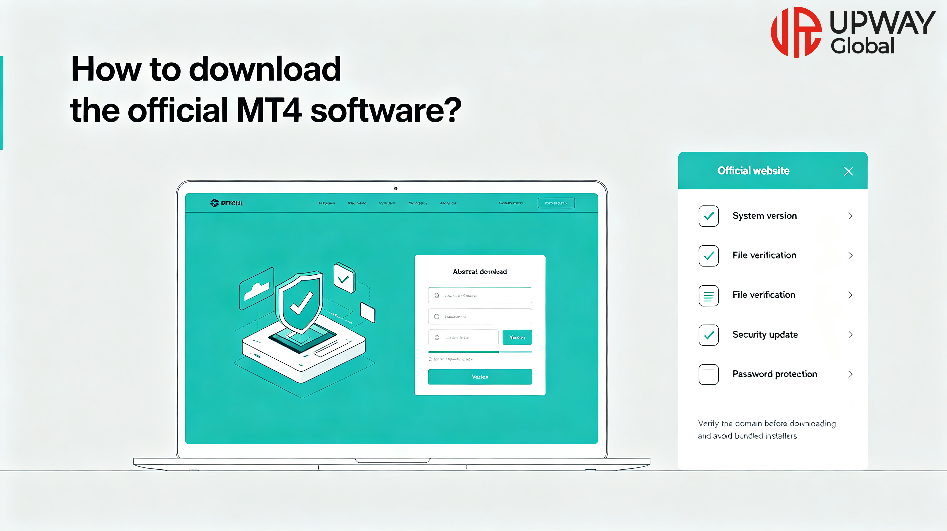
For trading infrastructure, UPWAY Global provides both MT4 and MT5 terminals to support flexible trading strategies and technical‑indicator workflows. Its proprietary trading system achieves order‑execution latency below 40 milliseconds with a slippage rate of merely 0.2 %, well below industry averages. The broker provides round‑the‑clock Chinese‑language customer support and free demo accounts loaded with up to USD 200 000 in virtual funds, letting beginners practise without financial risk. As of 2026, it boasts more than 5.3 million registered users and a daily trading volume of USD 4.5 billion.
Admittedly, no platform is flawless. Before committing to UPWAY Global or any other broker, investors must validate licence information via official regulator portals, carefully review user agreements and fee schedules, and test the trading environment on a demo account prior to making final decisions.
Practical Advice for Beginners
For new investors, the greatest risk is not poor returns but falling victim to unregulated “black‑box brokers” and losing principal. The core screening principles for beginners are regulatory compliance, reasonable entry thresholds and user‑friendly operation.
Before depositing real funds, complete these steps:
Verify the broker’s licence status through the regulator’s official website.
Confirm that client funds are held under a formal segregation arrangement.
Fully understand spreads, commissions and withdrawal‑deposit rules.
Always open and practise on a demo account first.
Demo accounts represent the safest starting point for new traders. They replicate nearly all functions of live accounts but use virtual capital, allowing users to familiarise themselves with platform workflows and test strategies without real‑world risk.
Trading precious metals and foreign exchange is a long‑term endeavour; choosing suitable “trading footwear” matters greatly. There is no universally perfect platform — only the best fit for individual needs. Prioritise well‑established, strictly‑regulated brokers if capital safety is your main concern; seek platforms with transparent pricing if low costs are your priority. Newcomers should favour brokers with comprehensive support and functional demo environments. Under all circumstances, preserving your principal should be every beginner’s top priority.
It should be noted that MT4 itself is merely a trading terminal. The actual determinants of fund safety and trading quality are the brokerage platforms behind this software. Faced with the vast array of MT4‑enabled platforms on the market, how can new‑comer investors distinguish trustworthy service providers? This article outlines practical selection criteria covering regulatory licensing, fund security, trading costs, system stability and other key dimensions.
Why MT4 Remains the Mainstream Choice
Developed by MetaQuotes Software, MT4 has long dominated the global retail‑trading sector. It comes pre‑installed with more than 30 technical indicators, nine timeframes, diverse charting tools and advanced analytical features that satisfy the analytical needs of most precious‑metal and forex traders. It also supports Expert Advisors (EAs), enabling automated trade execution via trading robots. In terms of system performance, MT4 delivers near‑instant order execution and maintains high stability even under heavy trading volumes. In addition, it offers comprehensive risk‑management functions including stop‑loss, take‑profit and trailing‑stop orders, helping investors manage risks amid sharp market swings. Seamless sync between mobile and PC versions allows users to check market quotes and manage orders anytime, anywhere.
For these reasons, MT4 remains the standard trading software for most legitimate brokers. Picking the right software is only the first step; selecting a trustworthy brokerage platform is far more critical.
Four Core Considerations for Selecting an MT4 Platform
1. Regulatory Licensing: The First Line of Defence for Fund Safety
Prioritising platforms certified by authoritative regulatory bodies constitutes the fundamental prerequisite for safeguarding your capital. Internationally‑recognised strict regulators include the UK’s Financial Conduct Authority (FCA), the Australian Securities and Investments Commission (ASIC), the Cyprus Securities and Exchange Commission (CySEC), as well as Hong Kong’s Gold Exchange. These authorities impose stringent requirements on brokerages regarding capital adequacy, client‑fund administration and trading transparency. Investors may verify the authenticity and active status of licences on official regulator websites by entering a platform’s licence number or corporate name. Special caution should be exercised with brokers holding only offshore island‑jurisdiction licences, as such regulation generally offers limited practical safeguards.
2. Fund Segregation: An Extra Safeguard for Your Capital
Fund segregation is a mandatory practice for formal brokers: client funds must be held separately from the brokerage’s own operating capital in dedicated bank accounts. This mechanism effectively prevents brokers from misappropriating client money. When evaluating platforms, check whether their official website explicitly states their fund‑segregation policies.
3. Trading Costs: Details That Impact Net Returns
Trading costs are mainly reflected in spreads and commissions. Account types vary significantly across brokers: standard accounts roll fees into spreads, while ECN accounts feature ultra‑tight spreads but charge separate commissions. Beginners should assess not only spread levels but also hidden expenses such as swap rates and withdrawal fees. Over time, these recurring charges can materially erode overall investment returns.
4. System Stability and Order‑Execution Quality
System stability directly governs order‑execution speed and slippage control. Opt for brokers with robust servers and low‑latency order execution to avoid scenarios where market prices are visible yet order placement is delayed. Pay special attention to whether excessive, abusive slippage occurs during events such as Non‑Farm Payroll releases or sudden geopolitical shocks when market liquidity thins.
Platform Selection Illustrated with the Example of UPWAY Global
Among precious‑metal brokers offering MT4 access, UPWAY Global holds the highest‑tier AA‑class Member status (No. 084) at Hong Kong’s Gold Exchange and possesses an official operating licence issued by Hong Kong’s local precious‑metal regulator. This dual‑regulatory framework means traders on UPWAY Global are protected under Hong Kong law as well as the rules of Hong Kong’s Gold Exchange. Public records show UPWAY Global has maintained a zero‑violation track record for years, with 100 % of client funds held in segregated custodian accounts.
For trading infrastructure, UPWAY Global provides both MT4 and MT5 terminals to support flexible trading strategies and technical‑indicator workflows. Its proprietary trading system achieves order‑execution latency below 40 milliseconds with a slippage rate of merely 0.2 %, well below industry averages. The broker provides round‑the‑clock Chinese‑language customer support and free demo accounts loaded with up to USD 200 000 in virtual funds, letting beginners practise without financial risk. As of 2026, it boasts more than 5.3 million registered users and a daily trading volume of USD 4.5 billion.
Admittedly, no platform is flawless. Before committing to UPWAY Global or any other broker, investors must validate licence information via official regulator portals, carefully review user agreements and fee schedules, and test the trading environment on a demo account prior to making final decisions.
Practical Advice for Beginners
For new investors, the greatest risk is not poor returns but falling victim to unregulated “black‑box brokers” and losing principal. The core screening principles for beginners are regulatory compliance, reasonable entry thresholds and user‑friendly operation.
Before depositing real funds, complete these steps:
Verify the broker’s licence status through the regulator’s official website.
Confirm that client funds are held under a formal segregation arrangement.
Fully understand spreads, commissions and withdrawal‑deposit rules.
Always open and practise on a demo account first.
Demo accounts represent the safest starting point for new traders. They replicate nearly all functions of live accounts but use virtual capital, allowing users to familiarise themselves with platform workflows and test strategies without real‑world risk.
Trading precious metals and foreign exchange is a long‑term endeavour; choosing suitable “trading footwear” matters greatly. There is no universally perfect platform — only the best fit for individual needs. Prioritise well‑established, strictly‑regulated brokers if capital safety is your main concern; seek platforms with transparent pricing if low costs are your priority. Newcomers should favour brokers with comprehensive support and functional demo environments. Under all circumstances, preserving your principal should be every beginner’s top priority.
