

UPWAY CHINA
Well-known member
Following the release of The First Five-Year Plan for Economic and Social Development of the Hong Kong Special Administrative Region (2026-2030), developing a commodity trading ecosystem with gold as a key entry point has emerged as an important direction for Hong Kong’s gold market over the coming years. The plan calls for stronger coordination across gold-related clearing systems, storage facilities and infrastructure, while supporting more bullion dealers and financial institutions in establishing a presence in Hong Kong. As market participation expands, Hong Kong’s gold market is set to gain further room for development.
In fact, infrastructure development in Hong Kong’s gold market had already been accelerating before the Five-Year Plan was announced. In July this year, Hong Kong’s central clearing and settlement system for gold began trial operations, alongside progress on the first phase of physical connectivity with the Shanghai Gold Exchange and the expansion of gold investment products. These developments point to continued improvements in Hong Kong’s trading and service infrastructure.
Looking ahead, the Five-Year Plan calls for further enhancements to gold storage and refining capacity, the study of relevant incentive measures, the development of RMB-denominated gold and commodity markets, and deeper cooperation with mainland exchanges. Hong Kong’s gold market is therefore evolving beyond individual gold products toward a broader ecosystem covering trading, storage, clearing, settlement, delivery and related services.
As market infrastructure continues to develop, the number of market participants and demand for related services may also increase. Beyond trading itself, areas such as customer acquisition, content distribution, investor education and channel partnerships could create new opportunities for connecting different parts of the market as it expands.

However, a clear policy direction does not mean that everyone can directly participate in every part of this ecosystem. Trading, clearing, storage and cross-border activities all involve relevant business qualifications, system capabilities, compliance requirements and resource investment. For partners that do not directly operate precious-metals trading businesses but already have customer resources, financial content or industry channels, building a complete trading infrastructure from scratch may not be practical.
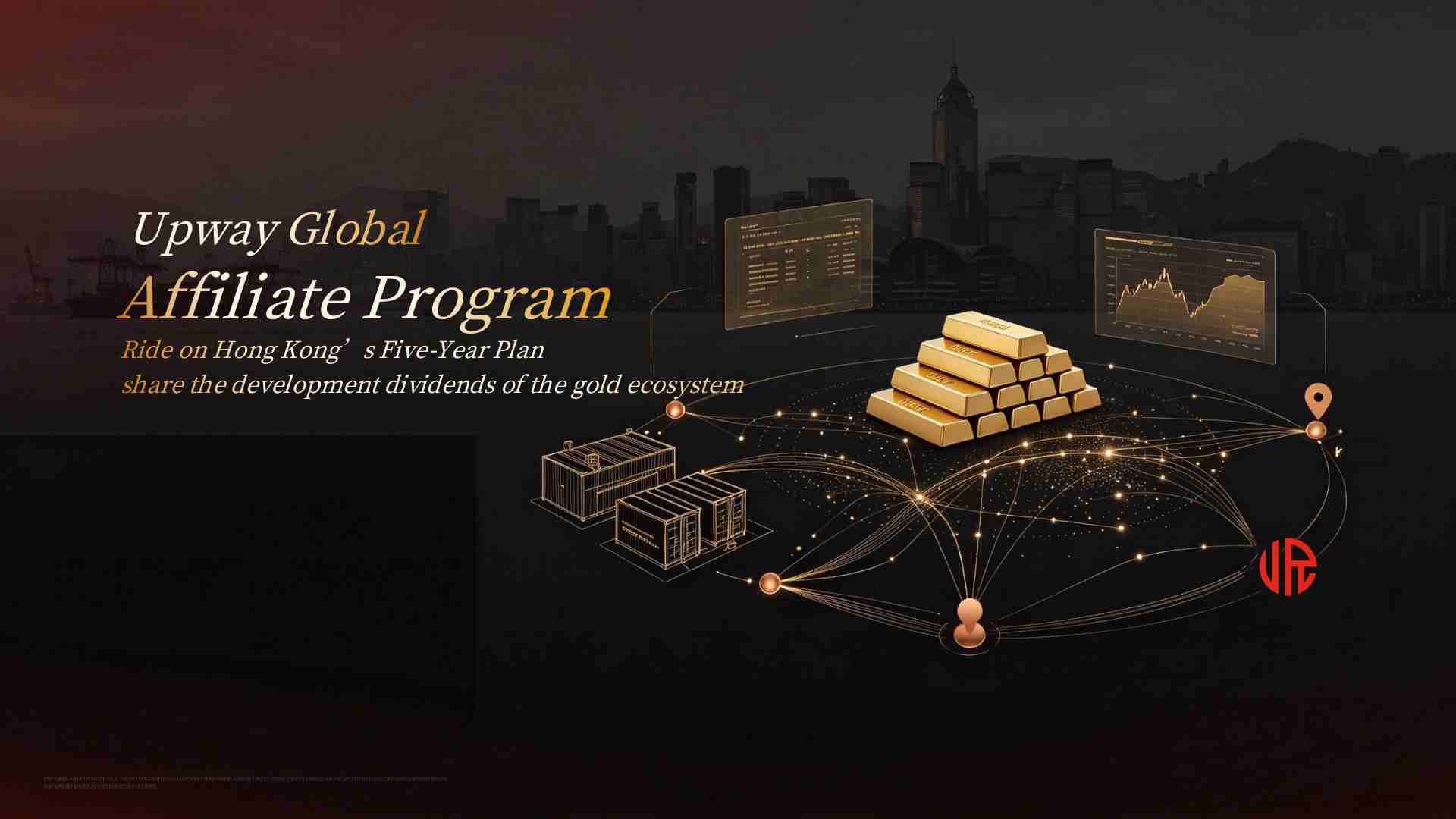
An alliance model offers another approach. Established in 2010, Upway Global holds the Hong Kong Gold Exchange AA-class member status, No. 084, and provides trading services for precious metals including Spot Gold and Spot Silver. Based on its existing trading service infrastructure, Upway Global has launched an Affiliate Program featuring two cooperation models: a Referral Program and an Advertising Alliance.
Rather than building a trading business from the ground up, the Affiliate Program provides a more direct connection between a trading platform and external resources. Partners with financial content, investment communities, customer resources or industry channels can recommend users through dedicated links or QR codes. Once users complete registration and activation, partners can receive corresponding rewards in accordance with the program rules. In other words, partners do not need to build a complete trading service infrastructure themselves; instead, they can connect their existing content, customer or channel resources with an established trading service.

As Hong Kong continues to strengthen the infrastructure supporting its gold ecosystem, new market participants and business scenarios may emerge. For trading platforms and external partners alike, creating more direct connections between resources and services could become increasingly relevant as the market expands. This is the role that the Upway Global Affiliate Program is designed to play.
Of course, policy support for market development does not translate into guaranteed investment returns. Gold and other precious-metals trading remain subject to factors including global economic conditions, policy changes and market volatility. Whether participating in trading or exploring an alliance partnership, it is important to understand the relevant rules and risks before making decisions based on individual circumstances.
In fact, infrastructure development in Hong Kong’s gold market had already been accelerating before the Five-Year Plan was announced. In July this year, Hong Kong’s central clearing and settlement system for gold began trial operations, alongside progress on the first phase of physical connectivity with the Shanghai Gold Exchange and the expansion of gold investment products. These developments point to continued improvements in Hong Kong’s trading and service infrastructure.
Looking ahead, the Five-Year Plan calls for further enhancements to gold storage and refining capacity, the study of relevant incentive measures, the development of RMB-denominated gold and commodity markets, and deeper cooperation with mainland exchanges. Hong Kong’s gold market is therefore evolving beyond individual gold products toward a broader ecosystem covering trading, storage, clearing, settlement, delivery and related services.
As market infrastructure continues to develop, the number of market participants and demand for related services may also increase. Beyond trading itself, areas such as customer acquisition, content distribution, investor education and channel partnerships could create new opportunities for connecting different parts of the market as it expands.
However, a clear policy direction does not mean that everyone can directly participate in every part of this ecosystem. Trading, clearing, storage and cross-border activities all involve relevant business qualifications, system capabilities, compliance requirements and resource investment. For partners that do not directly operate precious-metals trading businesses but already have customer resources, financial content or industry channels, building a complete trading infrastructure from scratch may not be practical.
An alliance model offers another approach. Established in 2010, Upway Global holds the Hong Kong Gold Exchange AA-class member status, No. 084, and provides trading services for precious metals including Spot Gold and Spot Silver. Based on its existing trading service infrastructure, Upway Global has launched an Affiliate Program featuring two cooperation models: a Referral Program and an Advertising Alliance.
Rather than building a trading business from the ground up, the Affiliate Program provides a more direct connection between a trading platform and external resources. Partners with financial content, investment communities, customer resources or industry channels can recommend users through dedicated links or QR codes. Once users complete registration and activation, partners can receive corresponding rewards in accordance with the program rules. In other words, partners do not need to build a complete trading service infrastructure themselves; instead, they can connect their existing content, customer or channel resources with an established trading service.
As Hong Kong continues to strengthen the infrastructure supporting its gold ecosystem, new market participants and business scenarios may emerge. For trading platforms and external partners alike, creating more direct connections between resources and services could become increasingly relevant as the market expands. This is the role that the Upway Global Affiliate Program is designed to play.
Of course, policy support for market development does not translate into guaranteed investment returns. Gold and other precious-metals trading remain subject to factors including global economic conditions, policy changes and market volatility. Whether participating in trading or exploring an alliance partnership, it is important to understand the relevant rules and risks before making decisions based on individual circumstances.

