

HFM
Well-known member
Date: 5th May 2026.
Gold Remains Under Pressure Despite Middle East Escalations.

Gold continues to remain under pressure from selling driven by the US Dollar and the Federal Reserve. The US Dollar is increasing in value as the Middle East continues to remain on edge. Since the start of May, the US Dollar Index has risen 0.50% despite the Japanese Yen increasing in value and experiencing multiple interventions.
The situation in the Middle East remains highly tense. Yesterday, President Donald Trump announced the launch of Operation Freedom, a plan aimed at freeing vessels from neutral countries currently trapped in the Persian Gulf following the closure of the Strait of Hormuz.
According to the White House, the operation would involve the deployment of several destroyers, more than 100 aircraft, and 15,000 troops. However, the details of the plan remain unclear. The Islamic Revolutionary Guard Corps (IRGC) continues to control the waters and has stated that no vessel will be allowed to pass without Tehran’s approval. In addition to this, there are also reports that Iran attacked a UAE ship attempting to pass through the Strait.
Markets viewed the announcement as a potential escalation in the US-Iran conflict. Investors responded by moving into safe-haven assets such as gold. Minneapolis Federal Reserve President Neel Kashkari also issued a warning yesterday. He said that a prolonged conflict could increase inflationary pressures and cause broader economic damage.
Even if the Strait of Hormuz blockade were lifted today, normal supply chains could take at least six months to recover. During this period, inflation may remain elevated, potentially encouraging the Federal Reserve to adopt a more hawkish tone.
Also notable today was Barclays’ updated outlook. The bank has now joined most brokers in expecting monetary policy to remain unchanged this year. Previously, Barclays analysts had projected a 25-basis-point rate cut in September, but they now expect any policy adjustment to take place no earlier than March 2027.
Investors continue to believe the US administration is attempting to find a way out of the conflict. This partially means there is a lesser need for Gold as a safe-haven asset. Nonetheless, the Strait of Hormuz continues to remain closed or is only opened to a limited number of ships. The longer this continues, the more likely inflation will continue to rise, and the Federal Reserve will become more likely to either hike or opt for a prolonged pause. Again, this pressures Gold prices.
In addition to this, the new Federal Reserve Chairman is due to take charge soon and investors are keen to see his stance on quantitative easing. If indeed the Federal Reserve reduces the QE programme, the US Dollar can become more expensive. Any reduction in the Fed’s QE programme will result in pressure for Gold as well as for the stock market.

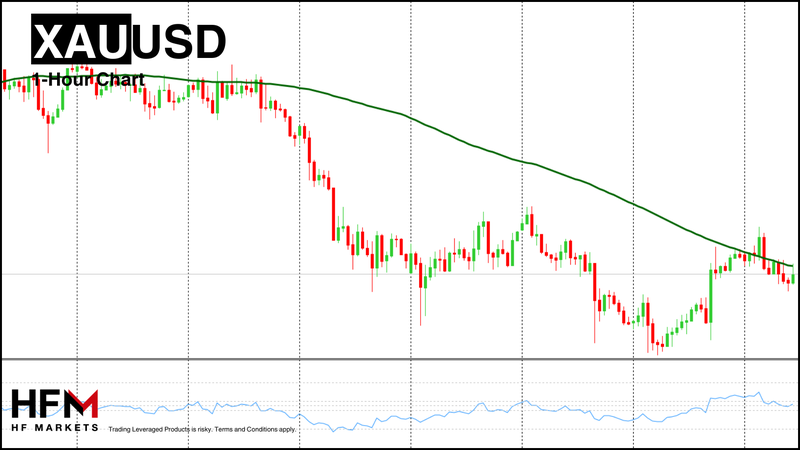
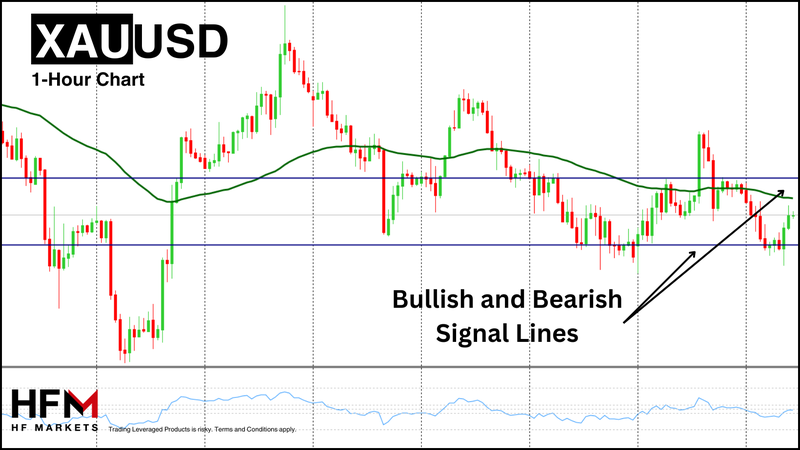
HFM - Gold 1-Hour Chart
During this morning’s session, gold remained under short-term technical pressure despite a modest rebound from recent lows. XAU/USD continues to trade near the lower end of its recent range, with sellers still active after the previous sharp decline. The key area to watch is around $4,500, as a clear break below this level could open the door for further downside momentum.
On the upside, Gold would need to recover above the $4,575 price to signal a stronger corrective rebound. For now, the technical picture remains cautious, with momentum still fragile. Traders are closely watching whether safe-haven demand can offset pressure from a stronger US dollar and elevated yields.
Please note that times displayed based on local time zone and are from time of writing this report.
Click HERE to access the full HFM Economic calendar.
Want to learn to trade and analyse the markets? Join our webinars and get analysis and trading ideas combined with better understanding of how markets work. Click HERE to register for FREE!
Click HERE to READ more Market news.
Michalis Efthymiou
HFMarkets
Disclaimer: This material is provided as a general marketing communication for information purposes only and does not constitute an independent investment research. Nothing in this communication contains, or should be considered as containing, an investment advice or an investment recommendation or a solicitation for the purpose of buying or selling of any financial instrument. All information provided is gathered from reputable sources and any information containing an indication of past performance is not a guarantee or reliable indicator of future performance. Users acknowledge that any investment in Leveraged Products is characterized by a certain degree of uncertainty and that any investment of this nature involves a high level of risk for which the users are solely responsible and liable. We assume no liability for any loss arising from any investment made based on the information provided in this communication. This communication must not be reproduced or further distributed without our prior written permission.
Gold Remains Under Pressure Despite Middle East Escalations.
Gold continues to remain under pressure from selling driven by the US Dollar and the Federal Reserve. The US Dollar is increasing in value as the Middle East continues to remain on edge. Since the start of May, the US Dollar Index has risen 0.50% despite the Japanese Yen increasing in value and experiencing multiple interventions.
The situation in the Middle East remains highly tense. Yesterday, President Donald Trump announced the launch of Operation Freedom, a plan aimed at freeing vessels from neutral countries currently trapped in the Persian Gulf following the closure of the Strait of Hormuz.
According to the White House, the operation would involve the deployment of several destroyers, more than 100 aircraft, and 15,000 troops. However, the details of the plan remain unclear. The Islamic Revolutionary Guard Corps (IRGC) continues to control the waters and has stated that no vessel will be allowed to pass without Tehran’s approval. In addition to this, there are also reports that Iran attacked a UAE ship attempting to pass through the Strait.
Markets viewed the announcement as a potential escalation in the US-Iran conflict. Investors responded by moving into safe-haven assets such as gold. Minneapolis Federal Reserve President Neel Kashkari also issued a warning yesterday. He said that a prolonged conflict could increase inflationary pressures and cause broader economic damage.
Even if the Strait of Hormuz blockade were lifted today, normal supply chains could take at least six months to recover. During this period, inflation may remain elevated, potentially encouraging the Federal Reserve to adopt a more hawkish tone.
Also notable today was Barclays’ updated outlook. The bank has now joined most brokers in expecting monetary policy to remain unchanged this year. Previously, Barclays analysts had projected a 25-basis-point rate cut in September, but they now expect any policy adjustment to take place no earlier than March 2027.
Investors continue to believe the US administration is attempting to find a way out of the conflict. This partially means there is a lesser need for Gold as a safe-haven asset. Nonetheless, the Strait of Hormuz continues to remain closed or is only opened to a limited number of ships. The longer this continues, the more likely inflation will continue to rise, and the Federal Reserve will become more likely to either hike or opt for a prolonged pause. Again, this pressures Gold prices.
In addition to this, the new Federal Reserve Chairman is due to take charge soon and investors are keen to see his stance on quantitative easing. If indeed the Federal Reserve reduces the QE programme, the US Dollar can become more expensive. Any reduction in the Fed’s QE programme will result in pressure for Gold as well as for the stock market.
HFM - Gold 1-Hour Chart
During this morning’s session, gold remained under short-term technical pressure despite a modest rebound from recent lows. XAU/USD continues to trade near the lower end of its recent range, with sellers still active after the previous sharp decline. The key area to watch is around $4,500, as a clear break below this level could open the door for further downside momentum.
On the upside, Gold would need to recover above the $4,575 price to signal a stronger corrective rebound. For now, the technical picture remains cautious, with momentum still fragile. Traders are closely watching whether safe-haven demand can offset pressure from a stronger US dollar and elevated yields.
- Gold remains under pressure as the US Dollar strengthens and Fed expectations stay hawkish.
- Middle East tensions continue to support safe-haven demand, but uncertainty remains high.
- Prolonged disruption in the Strait of Hormuz could keep inflation elevated and pressure Fed policy.
- XAU/USD remains technically cautious, with $4,500 as key support and $4,575 as resistance.
Please note that times displayed based on local time zone and are from time of writing this report.
Click HERE to access the full HFM Economic calendar.
Want to learn to trade and analyse the markets? Join our webinars and get analysis and trading ideas combined with better understanding of how markets work. Click HERE to register for FREE!
Click HERE to READ more Market news.
Michalis Efthymiou
HFMarkets
Disclaimer: This material is provided as a general marketing communication for information purposes only and does not constitute an independent investment research. Nothing in this communication contains, or should be considered as containing, an investment advice or an investment recommendation or a solicitation for the purpose of buying or selling of any financial instrument. All information provided is gathered from reputable sources and any information containing an indication of past performance is not a guarantee or reliable indicator of future performance. Users acknowledge that any investment in Leveraged Products is characterized by a certain degree of uncertainty and that any investment of this nature involves a high level of risk for which the users are solely responsible and liable. We assume no liability for any loss arising from any investment made based on the information provided in this communication. This communication must not be reproduced or further distributed without our prior written permission.


![2026-05-14 12_32_36-41023261_ HFMarketsSV-Demo Server - HF Markets (SV) Ltd. - [USDIndex,M30]](https://www.hfm.com/api/get-analysis-image/?file=images/2026-05-14_12_32_36-41023261__HFMarketsSV-Demo_.original.png "2026-05-14 12_32_36-41023261_ HFMarketsSV-Demo Server - HF Markets (SV) Ltd. - [USDIndex,M30]")

![2026-05-19 10_37_13-41023261_ HFMarketsSV-Demo Server - HF Markets (SV) Ltd. - [XAUUSD,H4]](https://www.hfm.com/api/get-analysis-image/?file=images/2026-05-19_10_37_13-41023261__HFMarketsSV-Demo_.original.png "2026-05-19 10_37_13-41023261_ HFMarketsSV-Demo Server - HF Markets (SV) Ltd. - [XAUUSD,H4]")


![2026-05-29 12_29_15-41023261_ HFMarketsSV-Demo Server - HF Markets (SV) Ltd. - [XAUUSD,H4]](https://www.hfm.com/api/get-analysis-image/?file=images/2026-05-29_12_29_15-41023261__HFMarketsSV-Demo_.original.png "2026-05-29 12_29_15-41023261_ HFMarketsSV-Demo Server - HF Markets (SV) Ltd. - [XAUUSD,H4]")


![2026-06-09 11_17_01-48132278 - HFMarketsGlobal-Demo - Netting - HF Markets (SV) Ltd. - [EURGBP,H4]](https://www.hfm.com/api/get-analysis-image/?file=images/2026-06-09_11_17_01-48132278_-_HFMarketsGlobal-.original.png "2026-06-09 11_17_01-48132278 - HFMarketsGlobal-Demo - Netting - HF Markets (SV) Ltd. - [EURGBP,H4]")
![HFMarketsSV-Demo Server - HF Markets (SV) Ltd. - [USOIL,Daily]](https://www.hfm.com/api/get-analysis-image/?file=images/HFMarketsSV-Demo_Server_-_HF_Markets_SV_Ltd.original.png "HFMarketsSV-Demo Server - HF Markets (SV) Ltd. - [USOIL,Daily]")

